
HEPA or Carbon Filter? Find the Right Air Purifier
Which filter is better, HEPA or activated carbon?
Neither filter is better for every job. HEPA filters are designed to capture airborne particles, while activated carbon filters help reduce odors and certain gases. The right choice depends on what you want to remove from your air: dust and pollen, lingering smells, smoke, or a mix of concerns.
What does a HEPA filter capture?
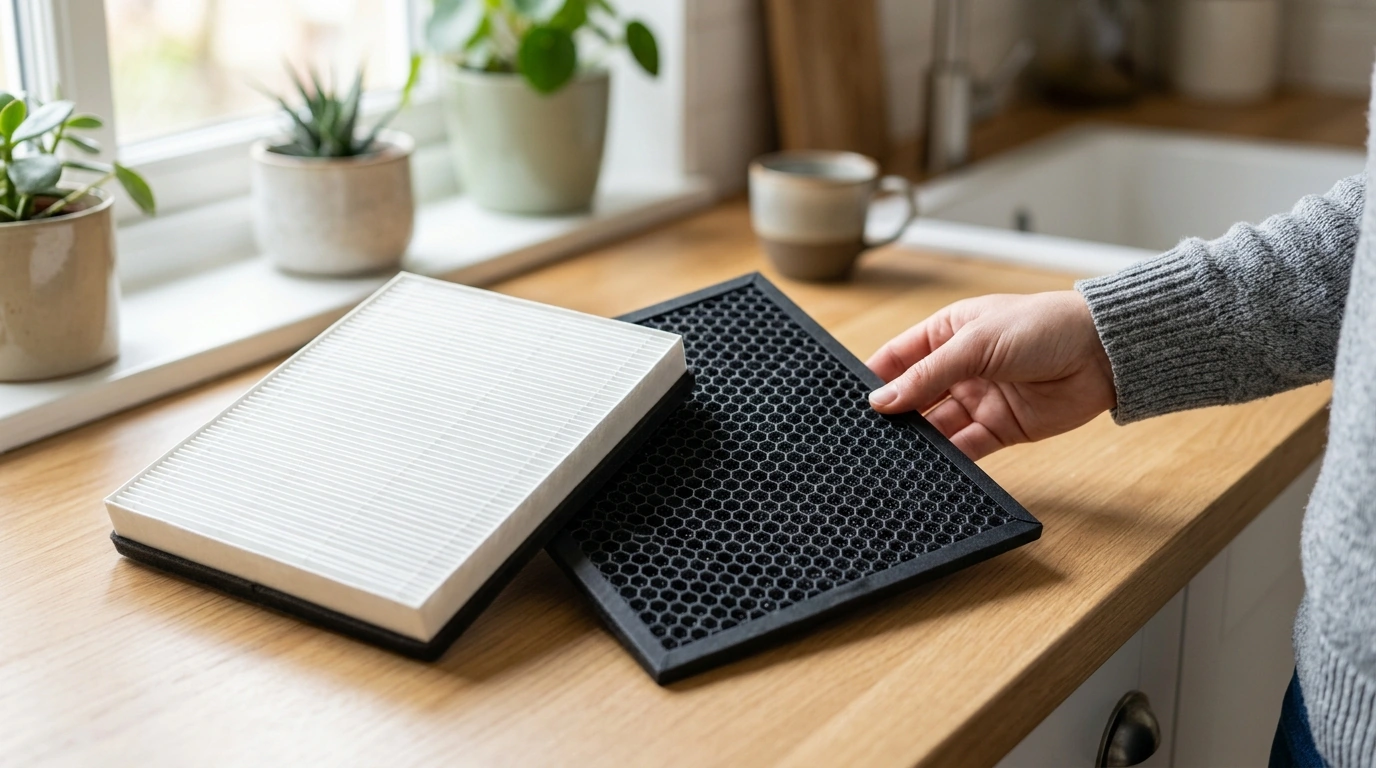
A HEPA filter traps particles such as dust, pollen, pet dander, and some airborne smoke particles as air passes through it. Choose a purifier with HEPA filtration if particle removal is your main priority. The filter does not remove odors or gases simply by trapping particles, so a HEPA-only model may not address cooking smells or chemical odors.
What does activated carbon remove?
Activated carbon has a porous surface that adsorbs many odor-causing compounds and some gases. It can be useful for cooking odors, smoke smells, and other unwanted scents. Carbon filtration is not a substitute for HEPA when your main concern is particles. Its effectiveness also depends on the amount and condition of carbon in the filter; it becomes less effective as its adsorption capacity is used up.
Which should you choose for smoke or mixed concerns?
Smoke contains both fine particles and gases that can contribute to odor. If you want to address both, look for an air purifier that combines a HEPA filter with an activated carbon stage. For dust, pollen, or dander without a particular odor concern, HEPA filtration may be the more relevant feature. For odors without a particle-removal priority, focus on a model with meaningful carbon filtration.
What else should you consider?
Match the purifier’s recommended room coverage to the space where you’ll use it, and consider how often you’re willing to replace filters. Follow the manufacturer’s replacement schedule and replace filters sooner if performance drops or odors return. A clogged or spent filter can limit how well the purifier works, even when it uses the right type of media.
For more help comparing filter types and choosing a purifier for dust, odors, or smoke, read our HEPA and carbon air purifier guide.
FAQ
How often should you replace an air purifier filter?
Follow the purifier or filter manufacturer’s replacement schedule, since timing varies by model and use. Replace a filter sooner if airflow drops or odors return.












Leave a comment