


How to Style a Walnut Sideboard with Fluted Doors
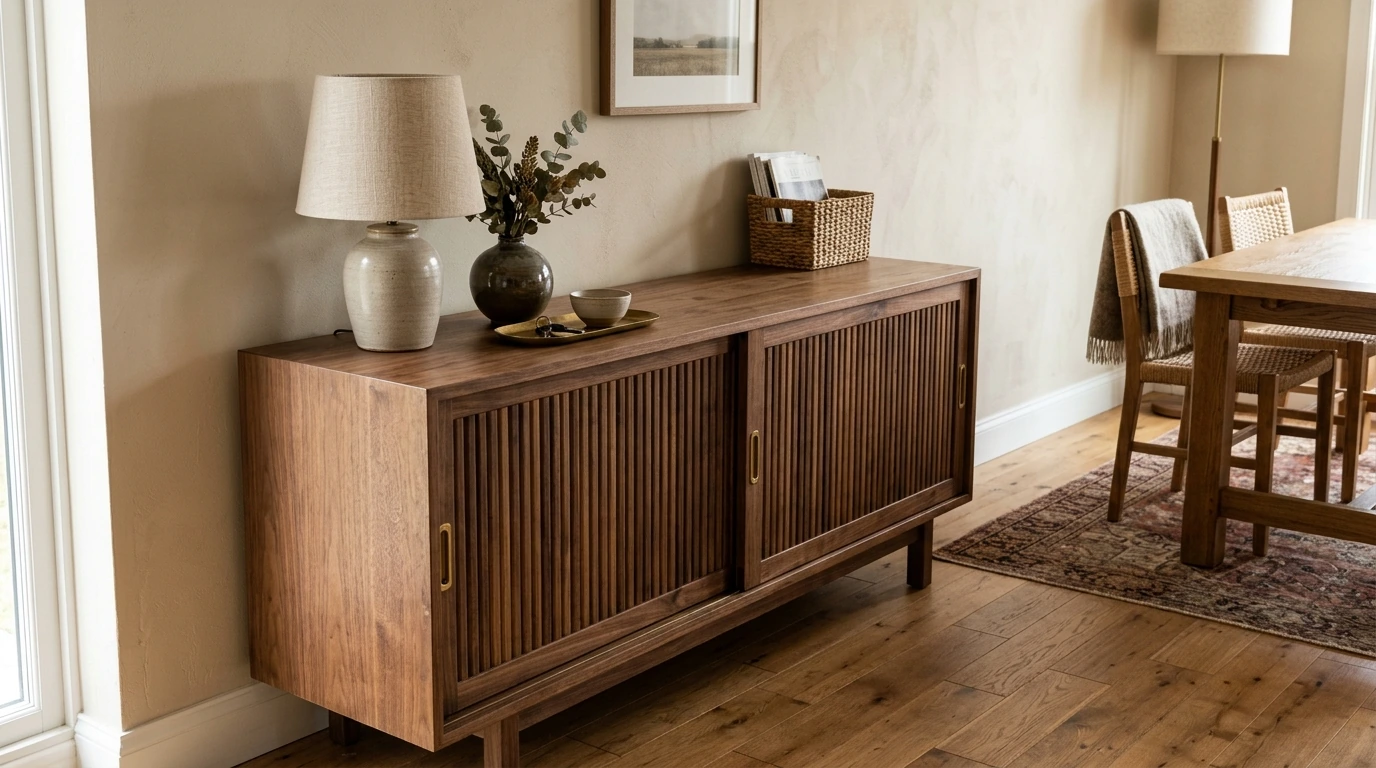
A sideboard earns its place when it makes daily life easier. The 53” Modern Sideboard Cabinet with Fluted Sliding Doors – Walnut Buffet Console can give you a place to put things away and a surface to use or style. Whether you picture it in a dining room, living room, or spacious entryway, start with the jobs you need it to do. That will help you decide where it belongs, what goes inside, and how much to leave on top.
Start with the Room, Not the Cabinet
In a dining room, a sideboard can keep table linens and serving pieces close to where you need them. In a living room, it can hold games and occasional-use accessories while giving a lamp or a few favorite objects a home. In a roomy entryway, it can become a landing spot for the things you want to find before heading out.
Before choosing a spot, measure the available wall space and look at how people move through the room. The 53-inch width is a useful starting point, but the full dimensions matter when you’re planning around nearby furniture, doors, and walkways. Sliding cabinet doors don’t swing out into the room, though you’ll still want enough space in front to stand comfortably and reach what’s inside.
Try marking the proposed footprint on the floor with painter’s tape. Walk past it, open nearby room doors, and pull out a dining chair if one will sit close by. This quick test can reveal a tight corner before the cabinet arrives. If the space feels crowded, a different wall may serve you better than squeezing the sideboard into the first available gap.
Make the Fluted Doors Part of the Look
The fluted doors bring texture to the front of the cabinet, so the top doesn’t need a complicated display to feel finished. We like starting with one useful object, such as a lamp or tray, and adding a vase or another piece you enjoy seeing. Leave part of the surface open for the moments when you need to set down serving dishes, a stack of mail, or something carried in from the next room.
For a warm, layered arrangement, group a few ceramics with a short stack of books and vary their heights. For a more restrained look, choose just two or three contrasting shapes—perhaps a rounded vase beside a simple lamp. Either way, give each object a little breathing room. You can always add more later, but starting small lets the cabinet’s door texture stay visible.
Let the room guide the finishing touches. A dining-room top may work hardest as a serving surface, while an entryway might need a dependable catchall tray more than a decorative arrangement. Our team would rather see a sideboard that’s easy for you to use every day than one that has to be cleared whenever you need it.
Give Each Item a Home
Organize the interior around what happens nearby. Keep dining essentials near the table, living-room activities near the seating area, or entryway supplies near the door. Group smaller items in containers you already own so they don’t get lost among larger pieces. Before assigning a spot to a tall vase, serving platter, or basket, measure the item and compare it with the cabinet’s listed interior dimensions and layout; don’t count on a particular shelf size or adjustable storage without confirming it.
| Room | Items to consider storing | Ideas for the top |
|---|---|---|
| Dining room | Linens, placemats, and serving pieces | A tray and a small centerpiece |
| Living room | Games, books, and occasional-use accessories | A lamp and a few favorite objects |
| Entryway | Baskets for everyday odds and ends | A catchall tray and a vase |
The table is a starting point, not a rule. If your dining area doubles as a workspace, you might reserve one part of the cabinet for supplies you want out of sight at dinnertime. If the sideboard sits near an entryway and powder room, our 500ml Glass Soap Dispenser Bottle is an option for the nearby sink—not something you need to add to the sideboard itself. Keeping each item where you use it most is what makes the arrangement practical.
Check the Details Before Ordering
Once you’ve settled on a location and purpose, confirm the cabinet’s full dimensions, interior layout, materials, assembly requirements, and care instructions on the product page. Measure the route into your home as well as the final spot: doorways, hallways, turns, and stairs can matter just as much as wall width. Plan where you’ll unpack and assemble the cabinet so the area is clear when it arrives.
Consider whether anchoring is appropriate for your household, particularly if children may be around the furniture. The U.S. Consumer Product Safety Commission’s Anchor It! Information Center offers guidance on furniture tip-over prevention. If the size, storage role, and walnut look fit your space, explore the sideboard’s product page for the details you need to make your decision.
FAQ
Where can a sideboard cabinet go besides a dining room?
A sideboard can work in a living room or roomy entryway if it fits the wall and leaves comfortable space to walk around it.
What should I measure before buying a 53-inch sideboard?
Measure the wall, nearby walking space, and delivery path, along with larger items you plan to store. Compare your measurements with the full product specifications.
How do I style a sideboard without making it look crowded?
Start with a small grouping of useful and decorative objects at varied heights, and leave some of the surface clear.













Leave a comment