



Baby’s First Foods: A Printable Guide to Starting Solids
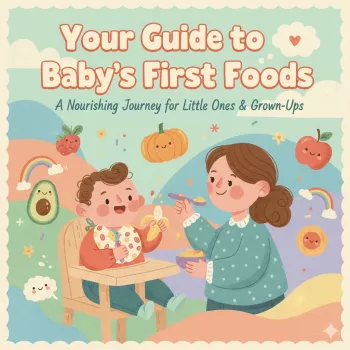
Starting solids can feel exciting and a little uncertain, especially when you’re deciding between spoon-feeding and baby-led weaning. Our printable eBook, Your Guide to Baby’s First Foods, is a resource you can keep nearby as you prepare for this new stage. Every baby develops at their own pace, so let your baby’s readiness and cues guide your decisions.
Getting Ready for First Foods
Babies generally begin eating solid foods around 6 months of age. At first, solids complement breast milk or infant formula rather than replace it. Small tastes and short meals give your baby opportunities to explore new flavors and textures while continuing their usual milk feeds.
Look for several readiness signs together. Your baby should be able to sit with support, hold their head steady, and show interest in food, such as watching you eat or reaching toward a meal. They also need to be able to move food toward the back of their mouth and swallow it rather than consistently pushing it out.
Ask your pediatrician about your baby’s individual readiness, particularly if you have feeding or developmental concerns. The CDC’s guidance on introducing solids offers an overview of readiness and early feeding.
Choosing and Preparing First Foods
There’s no required order for introducing most first foods. You can offer a variety of vegetables, fruits, grains, and proteins, including iron-rich choices such as iron-fortified infant cereal, well-cooked lentils, and meat. Choose textures your baby can manage and adjust them as their skills develop.
Start with small portions and give your baby time to explore. A baby may need several opportunities to become familiar with a food, so there’s no need to pressure them to finish. Watch for cues that they’ve had enough, such as turning away or closing their mouth.
First Food Ideas and Simple Ways to Serve Them
| Food | Serving idea | Consideration |
|---|---|---|
| Iron-fortified infant cereal | Mix to a smooth consistency | Offers a source of iron |
| Well-cooked lentils | Mash until soft | Check that the texture is easy to manage |
| Avocado | Mash or offer a soft, graspable piece | Adjust the shape and texture to your baby’s skills |
| Well-cooked egg | Offer mashed or in soft pieces | Egg is a common allergen |
Common allergens can also be introduced in age-appropriate forms. For example, serve well-cooked egg in a soft texture, or thin a small amount of smooth peanut butter into a suitable puree. Introduce an allergen on its own so you can watch for a reaction. If your baby has severe eczema or an egg allergy, talk with your pediatrician before introducing peanut-containing foods. The NIAID food allergy guidelines provide additional guidance.
Making Baby-Led Weaning Safer
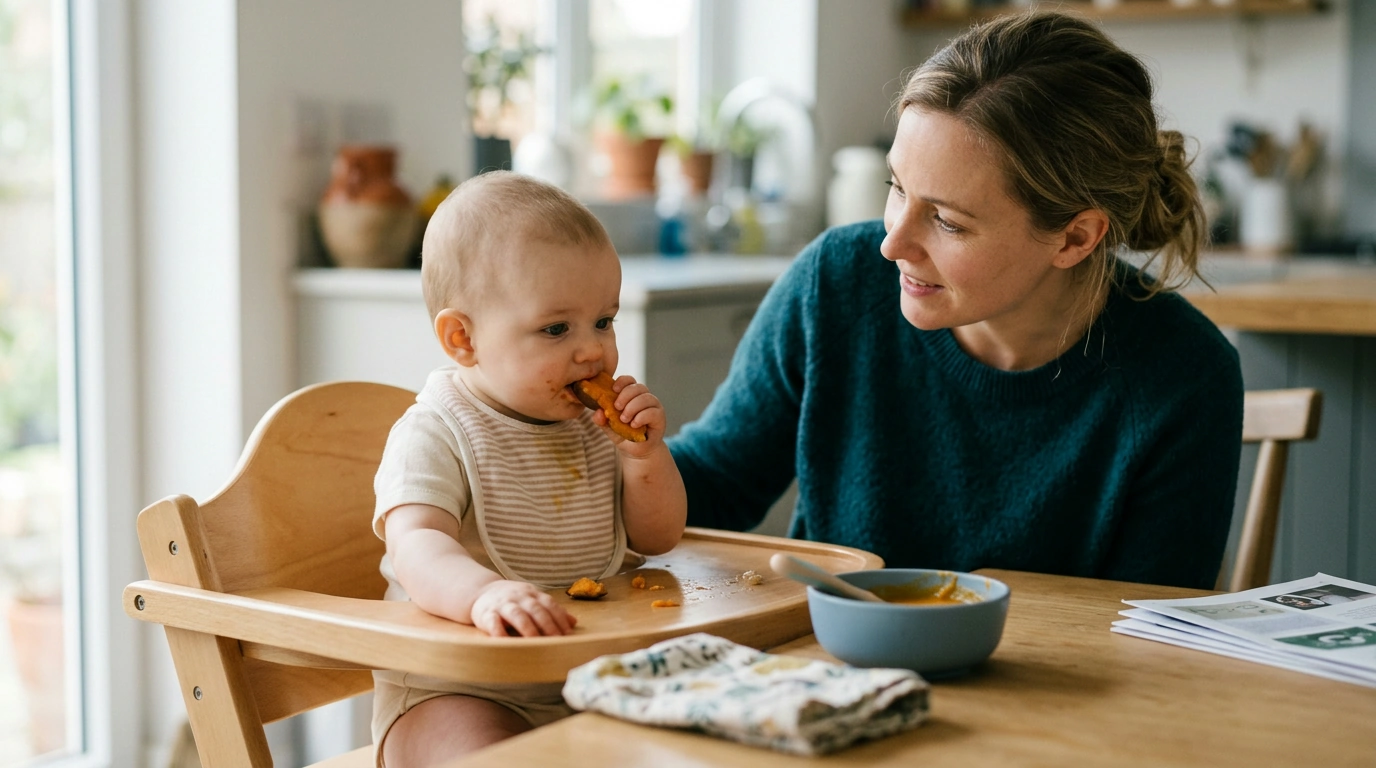
Baby-led weaning encourages babies to feed themselves appropriately prepared pieces of food. You don’t have to choose it exclusively: families can offer soft, graspable foods at some meals and spoon-fed textures at others. Follow your baby’s cues and select an approach that works for your family.
Seat your baby upright in a secure high chair and stay close, watching throughout the meal. Offer food that is soft enough to mash easily between your fingers and prepared in a shape your baby can manage. Avoid feeding while your baby is reclined, moving around, or riding in a car.
Keep choking hazards off the menu, including whole grapes, whole nuts, and large spoonfuls of nut butter. Grapes need to be cut lengthwise into narrow pieces, and nut butter should be thinned rather than served in a sticky lump. The CDC’s choking hazard guidance has more examples and preparation tips.
Gagging and choking are different. Gagging is often noisy and can happen as a baby learns to manage food; choking may be silent or involve difficulty breathing or crying. Learn infant first aid and choking response before you need it, and seek emergency help if your baby cannot breathe or cry.
Using the Printable First Foods Guide
Our Your Guide to Baby’s First Foods printable eBook is a resource for families exploring solid food introduction and baby-led weaning. Keep it handy when planning meals, and note any questions you want to discuss with your pediatrician or another healthcare professional.
The guide is listed at $87.99; the price is subject to change. Our team also carries a 500ml Glass Soap Dispenser Bottle for handwashing at the sink. Wash your hands before preparing food and your baby’s hands before meals.
Before choosing, compare the product details with your daily routine, available space, care needs, and preferred setup. The strongest option is usually the one that fits the intended use clearly and remains simple to clean, store, and check before repeat use.
FAQ
When can babies start eating solid foods?
Babies usually start solids around 6 months, when developmental readiness signs are present. Ask your pediatrician for individual guidance.
Can I combine spoon-feeding with baby-led weaning?
Yes. You can offer both suitable self-feeding foods and spoon-fed textures while following your baby’s cues.
Are there foods babies should avoid?
Avoid honey before age 1 and choking hazards such as whole nuts and whole grapes. Prepare foods in age-appropriate shapes and textures.














Leave a comment