


What Do Doctors Say About Air Purifiers? Key Advice
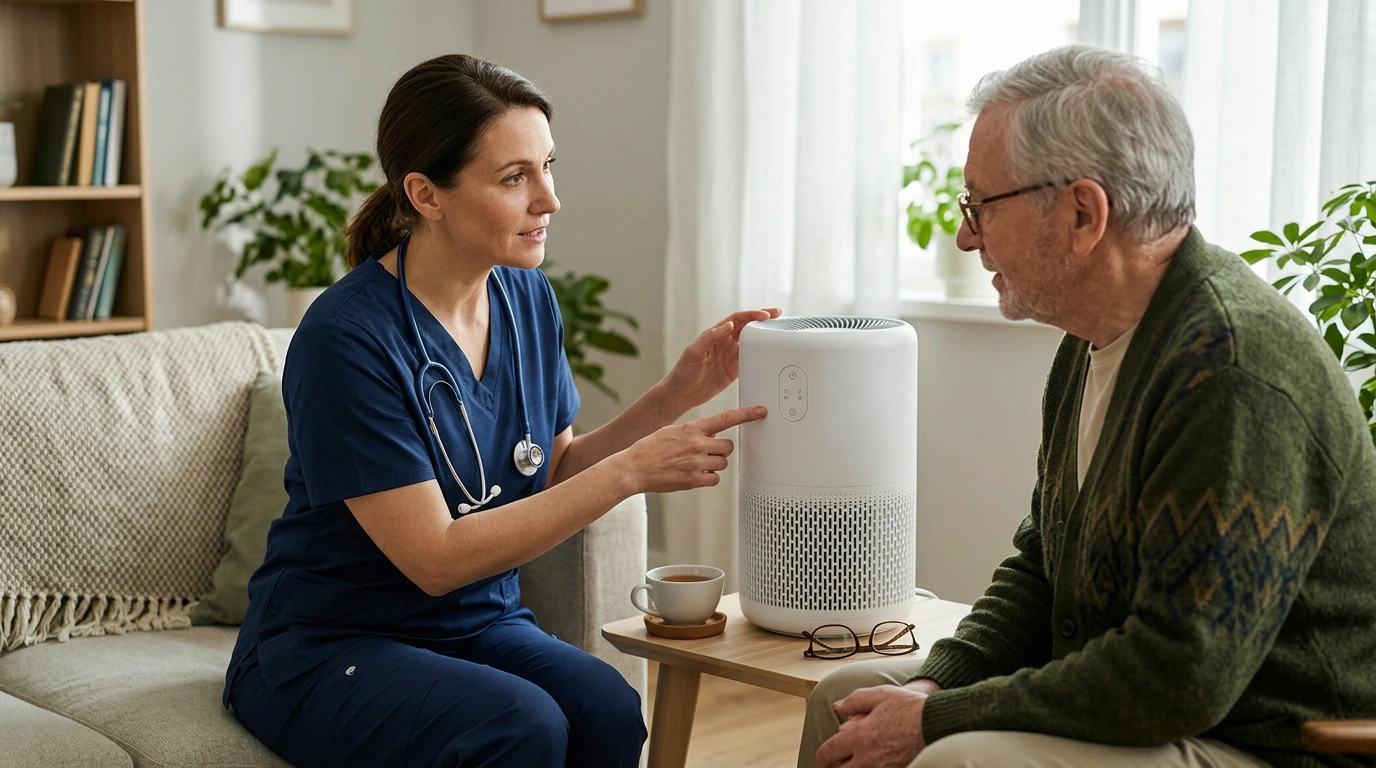
What do doctors say about air purifiers?
Doctors generally view air purifiers as a useful addition to a cleaner indoor environment, especially for people with allergies or asthma. A purifier can reduce airborne particles such as pollen, pet dander, and some smoke particles. It is not a cure, and it cannot replace prescribed treatment or remove every source of indoor pollution.
If you have a respiratory condition, talk with your clinician about symptoms and the steps that make sense for your home. For persistent breathing difficulty or worsening asthma, seek medical care rather than relying on a purifier alone.
How can an air purifier help with allergies and asthma?
A portable purifier with a HEPA filter captures small airborne particles as air passes through it. Reducing exposure to some allergens may help certain people, although results vary. A purifier cannot capture particles that have settled on bedding, floors, or furniture until they become airborne again.
We recommend pairing filtration with practical source control: fix moisture problems, avoid indoor smoking, clean regularly, and reduce exposure to triggers you already know affect you. During outdoor smoke events, keeping windows closed when safe to do so and running a suitable purifier can help reduce indoor particle levels.
What should you look for in an air purifier?
Our team suggests starting with the room where you spend the most time and choosing a unit sized for that space. Look for a clean air delivery rate, or CADR, appropriate for the room; a higher particle CADR generally means faster particle removal. A unit that is quiet enough to run consistently may be more useful than one you avoid using because of noise.
For odors and some gases, look for a model with activated carbon as well as particle filtration. Carbon does not remove every gas, and its effectiveness depends on the amount of material and the pollutant. Avoid ozone-generating devices: ozone can irritate the lungs and worsen breathing symptoms.
Keep airflow unobstructed and replace filters as directed by the manufacturer. For more help comparing filtration options, read our guide to HEPA and carbon air purifiers for dust, odors, and smoke.
FAQ
Can an air purifier replace ventilation?
No. A purifier can reduce certain indoor pollutants, but it does not reliably supply fresh air or remove carbon dioxide; use appropriate ventilation when outdoor conditions allow.
















Leave a comment