



Food-Grade Silicone Teething Ring: Baby’s First Year

A simple teething ring can give your baby another object to explore during supervised awake time. Our food-grade silicone teething ring is intended for babies from birth through 12 months, though the right time to offer it depends on your baby’s development and interest. For more guidance, see Soothing Effect of an Edible Teether: A Pilot Study in Children ….
Some babies are eager to grasp and mouth objects early in their first year, while others take their time. Teething schedules vary, too. Our team recommends keeping the experience relaxed: offer the ring when your baby is ready, stay close, and let your baby decide whether to explore it. For further reading, see These Are the Best Toys for Babies Right Now.
Meet the Silicone Teething Ring
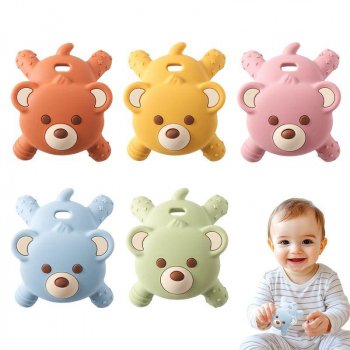
Our silicone teething ring for babies aged 0–12 months is a food-grade silicone sensory toy designed for a baby’s first year. As babies grow, they often investigate objects by touching, holding, and mouthing them. A ring can be one option to offer during those early moments of discovery.
The ring is currently $6.01. Visit the product page for current availability before you order.
Being intended for the first year does not mean every newborn will be ready to hold or use a teether. You can wait until your baby shows interest and has the developing ability to explore it. There is no need to introduce the ring on a fixed schedule or expect it to be used in a particular way.
Teething and Sensory Play Through the First Year
Babies develop at their own pace, and their interest in toys can change from one day to the next. A teething ring may become part of a short play session when your baby begins reaching for objects or bringing them toward their mouth. Your presence matters throughout: stay with your baby, watch how the ring is used, and put it away when playtime is over.
Teething can start at different ages. Some babies show interest in mouthing objects before a tooth appears, while others may not be interested in a ring at all. The table below is a flexible guide to the first year, not a checklist or a way to judge your baby’s progress.
| Age range | What parents may notice | How to approach the ring |
|---|---|---|
| 0–3 months | Babies are beginning to explore their surroundings. | Offer only when developmentally appropriate and supervise closely. |
| 4–6 months | Some babies begin reaching for and mouthing objects; teething may start. | Let your baby explore during supervised play. |
| 7–12 months | Grasping skills and interest in objects continue to develop. | Continue to supervise and check the ring before each use. |
During play, you might offer the ring and give your baby time to respond. Your baby may hold it briefly, bring it to their mouth, or turn toward something else. Each response is fine. If your baby seems uninterested or upset, put the ring aside and try another time.
Using a Teething Ring Safely
Always supervise your baby while the ring is in use. Before each use, inspect it for damage or changes in condition. If you notice damage, stop using it. A quick check is a useful habit even when the ring was in good condition the last time you offered it.
Keep the ring out of your baby’s sleep space, and do not attach it around your baby’s neck. Offer it during awake time when you can watch your baby closely, then put it away when the session ends.
Follow the product’s care instructions for cleaning. Do not assume the ring is dishwasher-safe, sterilizer-safe, or suitable for freezing. Keeping it clean between uses is especially important because babies may put it in their mouths.
If your baby seems uncomfortable during teething, you can gently massage their gums with a clean finger. Contact your pediatrician if you have concerns or if symptoms persist. The U.S. Food and Drug Administration’s teething guidance offers additional information about soothing sore gums and avoiding unsafe remedies.
Adding the Ring to Your Routine
There is no need to build a complicated routine around a teether. You might offer the clean ring during a calm stretch of supervised awake time, when your baby is alert and interested in exploring. Let your baby set the pace rather than placing it in their mouth or insisting that they use it.
When play is finished, clean the ring according to its product instructions and keep it clean until the next use. Check it again before offering it. If your baby has had enough, a break is perfectly reasonable; the ring can be available another day.
For another household essential, our 500ml glass soap dispenser bottle is an option for your handwashing area. Keep household items out of your baby’s reach.
Whether your baby is just beginning to notice objects or is already reaching for them, we invite you to explore our silicone teething ring as a simple addition to supervised play during the first year.
FAQ
What age is this silicone teething ring intended for?
It is intended for babies aged 0–12 months. Offer it when developmentally appropriate and supervise its use, as teething and readiness to hold or mouth objects vary.
How should I clean the teething ring?
Follow the product’s care instructions. Do not assume a dishwasher, sterilizer, or any particular cleaning method is suitable.
Can my baby use the teething ring during sleep?
No. Keep the ring out of your baby’s sleep space and offer it during supervised awake time instead.














Leave a comment