



2-in-1 Laser Tape Measure: 135 ft Laser + 16 ft Tape
2-in-1 Laser Tape Measure for Fast, Confident Layouts: 135 ft Laser + 16 ft Tape with Digital Display
When your project depends on clean numbers—whether you’re cutting trim, spacing anchors, or ordering materials—switching between tools can slow you down and invite small mistakes. Our team likes the simplicity of a 2-in-1 approach: a long-range laser readout for open spaces (up to 135 ft), plus a built-in 16 ft tape for quick close-up checks. Add a digital display you can read at a glance, and you get a workflow that stays steady from planning to install.
Why a laser + tape beats guessing on bigger spaces
Traditional tape measures are great until the room is wide, the ceiling is high, or you’re working alone. A laser distance measure helps you cover long runs without dragging a blade across the floor or trying to keep it level.
- Measure walls, ceilings, and room-to-room distances quickly with the laser—no wrestling a tape across furniture.
- Reduce rework on layout-heavy tasks like shelving, TV mounts, curtain rods, trim planning, and flooring estimates.
- Use the 16 ft tape for tight physical reference points (inside cabinets, between studs) when a laser target isn’t convenient.
- A digital display helps prevent misreads from tiny markings, dim lighting, and awkward angles.
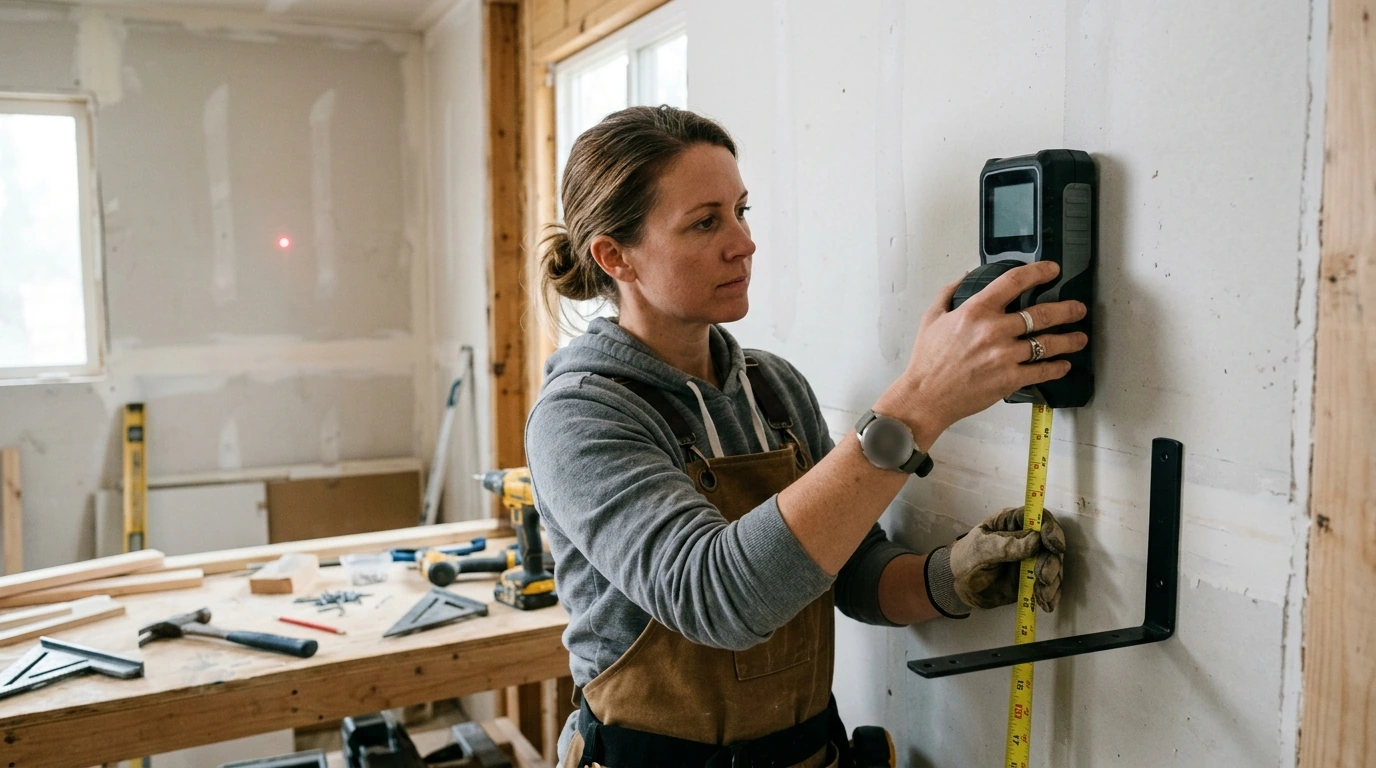
- Great for solo work—you can capture room measurements without needing someone to hold the hook end.
Two measuring modes that cover most DIY and install jobs
The best part of a combined tool is choosing the method that fits the surface and situation, without changing what you’re holding.
- Laser mode (up to 135 ft): ideal for room dimensions, wall-to-wall distance, and quick takeoffs for planning materials.
- Tape mode (16 ft): ideal for short spans, edge-to-edge measurements, and quick hook-and-read checks.
- Set a reference length with the tape, then repeat or verify across multiple locations with the laser (like evenly spaced anchor points).
- Use tape on textured edges and laser on clean line-of-sight distances.
- Keeping everything in one tool helps maintain consistency—fewer chances to mix different rounding habits or formats.
Quick guide: when to use the laser vs. the tape
| Task | Best Mode | Why it works |
|---|---|---|
| Measure room length/width for paint or flooring estimates | Laser | Long range and easy repeatability across open spaces |
| Check cabinet opening, shelf depth, or tight interior spacing | Tape | Physical contact measurement works even without a clear line of sight |
| Mark mounting points across a wall | Laser | Fast distance checks while moving point-to-point |
| Verify a cut length on lumber or trim | Tape | Quick hook-and-read on an edge |
| Confirm a final fit before drilling or fastening | Laser + Tape | Laser for span, tape for close-up confirmation at the endpoint |
Reading measurements clearly with a digital display
A readable number is an underrated upgrade—especially when you’re working overhead, measuring across corners, or moving quickly through a cut list.
- The digital display stays legible when you can’t get your eyes square to a tape blade.
- It’s easier to pause and confirm the exact value before you commit to drilling, fastening, or cutting.
- For planning, you can capture the displayed measurement and move on without interpreting tick marks.
- Build an accuracy habit: measure twice from the same reference and confirm you get the same displayed result.
Practical tips for accurate laser and tape measurements
If you want deeper background on measurement fundamentals, the National Institute of Standards and Technology (NIST) length resources are a solid reference. And because laser tools deserve basic respect on the jobsite, OSHA’s overview of laser hazards is worth a quick read.
Where this 2-in-1 tool fits best around the home and jobsite
Product at a glance
- 2-in-1 Laser Tape Measure, 135 ft Laser + 16 ft Tape, Digital Display: one tool that combines laser distance measurement and a built-in tape for close-range checks.
- Diadora Men’s Sneakers: dependable everyday footwear for moving between rooms, ladders, and the garage.
- 500ml Glass Soap Dispenser Bottle: a simple upgrade for a workshop sink or utility area after a dusty install.
FAQ
When should laser measurements be trusted over a tape measure?
Laser measurements are most dependable for straight, clear line-of-sight distances across open areas, like wall-to-wall or floor-to-ceiling checks. A tape measure is better for tight interiors, measuring around obstacles, or when you can’t clearly target an endpoint. For critical cuts, confirm with a second measurement method before you cut.
How can measurement errors be reduced when using a laser ft tape indoors?
Steady the tool, aim at a flat endpoint, and use a light target on shiny or dark surfaces to improve the reading. Start from consistent reference points so small offsets don’t creep in, and take two readings before drilling or cutting. For tape mode, seat the hook and keep the blade straight for a true distance.
Is a digital display helpful for DIY projects?
Yes—clear digits are faster to read than small tick marks and can reduce misreads in low light or when measuring overhead. A digital display also helps you repeat the same measurement across multiple points more consistently. It’s especially useful when you’re moving quickly through a list of layout marks.















Leave a comment