



Are Silicone Cups Good for Babies? A Practical Guide
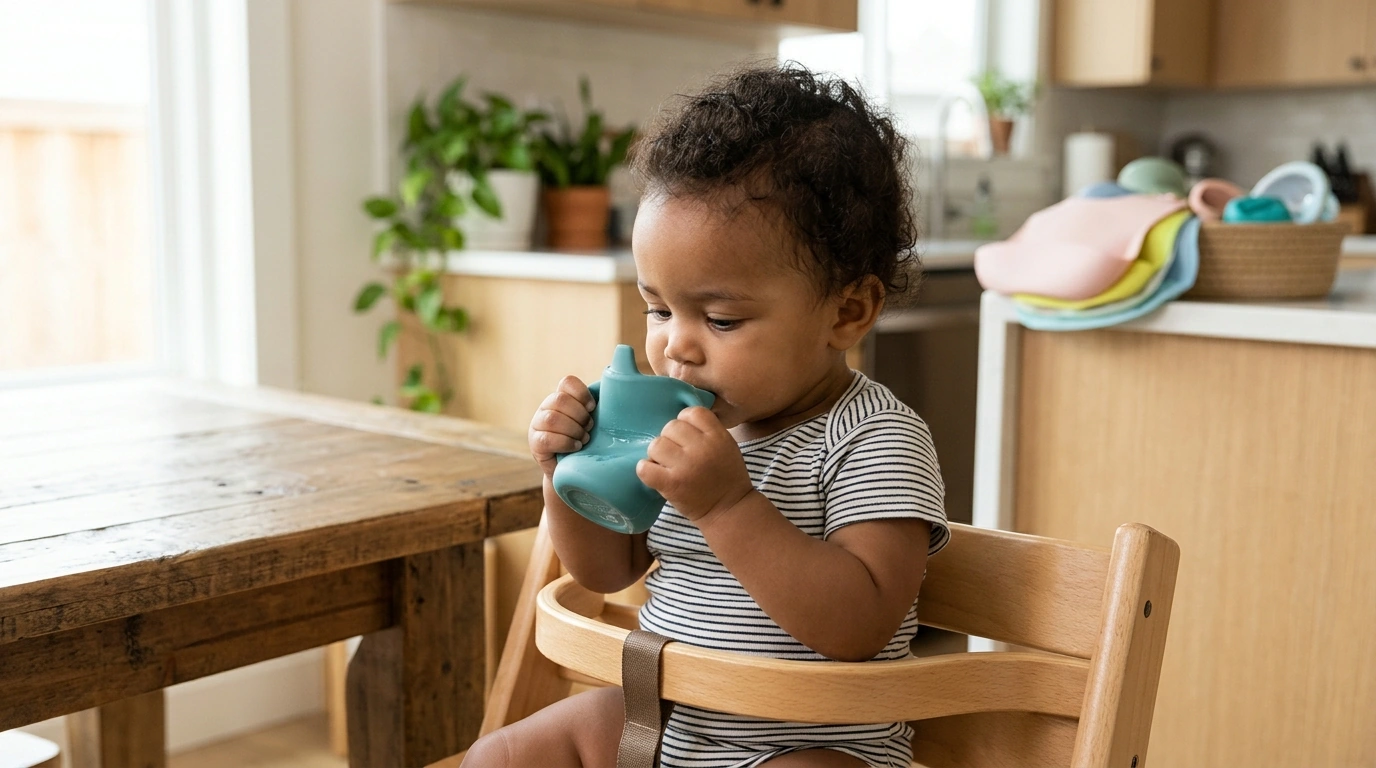
Are silicone cups good for babies?
Yes. Silicone cups can be a practical choice when your baby is ready to practice drinking from a cup. They are soft to the touch, lightweight, and less likely to break when dropped than glass or ceramic. Handles can also give little hands a comfortable place to grip as your baby learns to lift and lower a cup.
We like silicone cups for their everyday versatility: you can offer a little water with a meal, practice sipping, and clean up without worrying about a shattered cup. They still require supervision, though, and no cup makes spills disappear completely.
When can your baby start using a cup?
Around 6 months, when your baby begins eating solid foods, you can introduce small sips of water in an open cup or a cup with a straw. Start with a small amount and help guide the cup as needed. Breast milk or formula should remain the main source of nutrition during the first year.
Early cup practice is a skill, not a race. Your baby may dribble, tip the cup, or need help holding it at first. Short, relaxed practice sessions at mealtimes can make the experience easier for both of you.
What should you look for in a silicone baby cup?
Choose a cup made from food-grade silicone and sized for your baby to handle with your help. A stable base can make it easier to set down, while handles may help your baby practice gripping. An open cup allows you to see how much is inside and makes it easy to offer just a few sips.
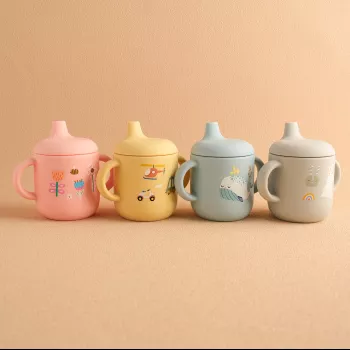
For a handle-style option, explore our guide to the 6-ounce cartoon silicone baby cup. Our team recommends focusing on a manageable grip and a simple design that fits your feeding routine.
How do you use and care for a silicone cup safely?
Stay with your baby during cup practice and have them sit upright while drinking. Offer cool or lukewarm liquids, not hot drinks. If the cup has a lid, straw, or other removable parts, make sure they are securely fitted and keep loose pieces out of your baby’s reach.
Wash the cup and any removable parts thoroughly after use, following the manufacturer’s care instructions. Inspect it regularly, and replace it if it becomes torn, cracked, or otherwise damaged.
FAQ
How much water should a baby drink when starting solids?
Babies ages 6 to 12 months generally need only small amounts of water, about 4 to 8 ounces per day, alongside breast milk or formula. Ask your pediatrician for guidance if you have concerns about your baby’s fluid needs.















Leave a comment