
HEPA Air Purifier Downsides: Costs, Noise and Limits
What are the downsides of using a HEPA air purifier?
A HEPA air purifier can reduce airborne particles, but it is not a complete solution for every indoor air problem. Its main drawbacks are ongoing filter costs, fan noise, electricity use, and limited effectiveness against odors and gases. You also need to choose a unit with enough airflow for your space and keep it running regularly.
Replacement filters add to the cost
HEPA filters collect particles rather than washing them away. Most need periodic replacement, and the cost depends on the purifier and how heavily you use it. A clogged filter can restrict airflow, so follow the manufacturer’s replacement schedule and plan for the expense before choosing a model.
Noise and energy use vary
The fan can be noticeable, particularly on a high setting. A lower setting may be quieter, but it also moves less air through the filter. Purifiers use electricity whenever they run, so operating one for long periods adds to your energy use. Compare noise and power information when choosing a unit for a bedroom, office, or living area.
HEPA filtration does not remove every pollutant
HEPA filters are designed to capture airborne particles such as dust, pollen, and some smoke particles. They do not reliably remove gases or odors on their own. For cooking smells, smoke odors, or other gaseous pollutants, look for a purifier with an activated carbon filter as well as HEPA filtration. Carbon filters also need replacement, and their effectiveness varies with the amount of carbon and the pollutant.
Coverage and placement matter
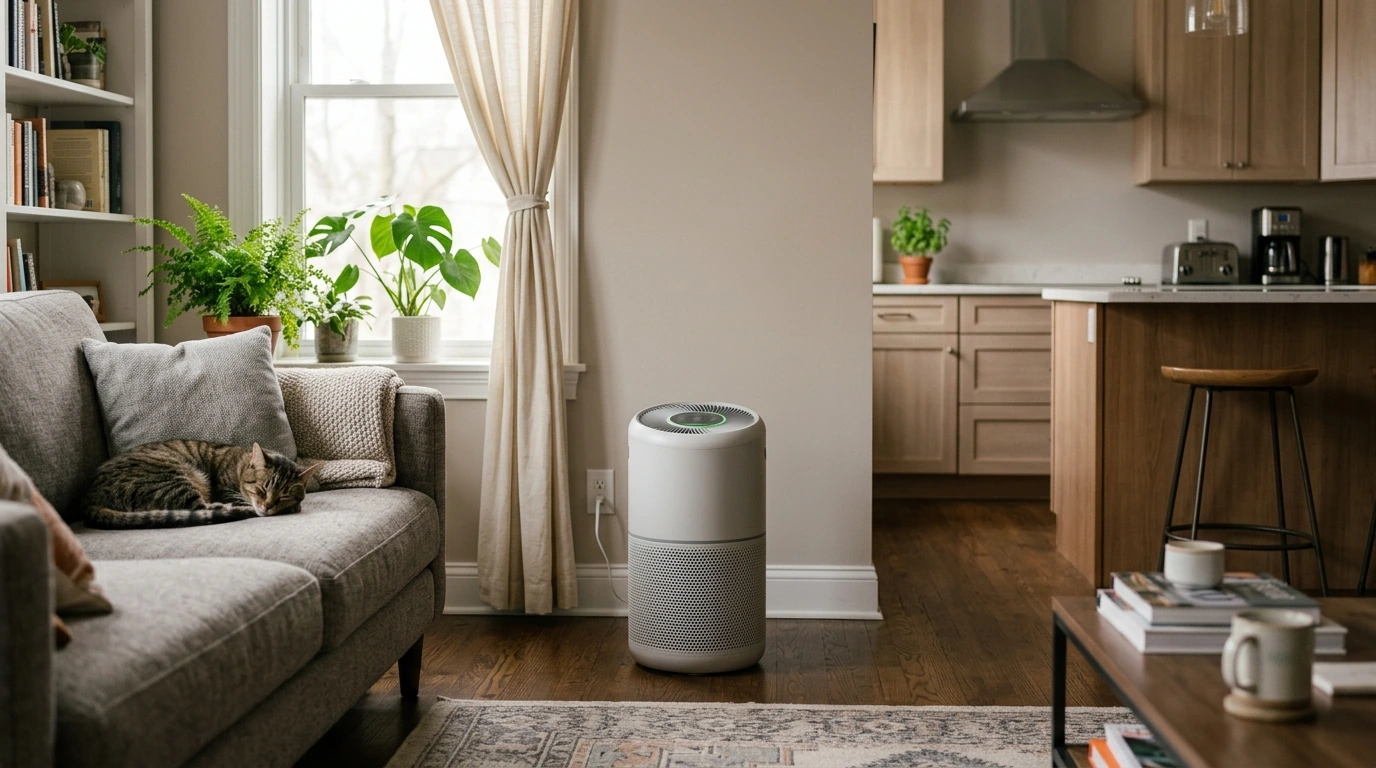
An undersized purifier may not clean the air quickly enough for the room. Compare the unit’s clean air delivery rate, or CADR, with your room size, and allow space around the intake and outlet. Air purifiers work on air that passes through them; they cannot remove dust already settled on furniture or replace cleaning and ventilation.
Some models include features you may not want
Air purifiers with ionizers or other electronic air-cleaning features may produce ozone. If you want particle filtration without that concern, choose a HEPA purifier without an ozone-generating feature, or make sure any optional ionizer can be turned off.
Our team recommends balancing room coverage, replacement costs, and noise before you buy. For more guidance, read our guide to HEPA and carbon air purifiers for dust, odors, and smoke.
FAQ
Where should you place a HEPA air purifier?
Place it in the room where you spend the most time, with its air intake and outlet unobstructed. Keep it away from curtains and furniture that could block airflow, and follow the manufacturer’s clearance instructions.
Recommended for you


What are the downsides of using a HEPA air purifier?
A HEPA air purifier can reduce airborne particles, but it is not a complete solution for every indoor air problem. Its main drawbacks are ongoing filter costs, fan noise, electricity use, and limited effectiveness against odors and gases. You also need to choose a unit with enough airflow for your space and keep it running regularly.
Replacement filters add to the cost
HEPA filters collect particles rather than washing them away. Most need periodic replacement, and the cost depends on the purifier and how heavily you use it. A clogged filter can restrict airflow, so follow the manufacturer’s replacement schedule and plan for the expense before choosing a model.
Noise and energy use vary
The fan can be noticeable, particularly on a high setting. A lower setting may be quieter, but it also moves less air through the filter. Purifiers use electricity whenever they run, so operating one for long periods adds to your energy use. Compare noise and power information when choosing a unit for a bedroom, office, or living area.
HEPA filtration does not remove every pollutant
HEPA filters are designed to capture airborne particles such as dust, pollen, and some smoke particles. They do not reliably remove gases or odors on their own. For cooking smells, smoke odors, or other gaseous pollutants, look for a purifier with an activated carbon filter as well as HEPA filtration. Carbon filters also need replacement, and their effectiveness varies with the amount of carbon and the pollutant.
Coverage and placement matter
An undersized purifier may not clean the air quickly enough for the room. Compare the unit’s clean air delivery rate, or CADR, with your room size, and allow space around the intake and outlet. Air purifiers work on air that passes through them; they cannot remove dust already settled on furniture or replace cleaning and ventilation.
Some models include features you may not want
Air purifiers with ionizers or other electronic air-cleaning features may produce ozone. If you want particle filtration without that concern, choose a HEPA purifier without an ozone-generating feature, or make sure any optional ionizer can be turned off.
Our team recommends balancing room coverage, replacement costs, and noise before you buy. For more guidance, read our guide to HEPA and carbon air purifiers for dust, odors, and smoke.
FAQ
Where should you place a HEPA air purifier?
Place it in the room where you spend the most time, with its air intake and outlet unobstructed. Keep it away from curtains and furniture that could block airflow, and follow the manufacturer’s clearance instructions.











Leave a comment