



Pulse Repair Charger: Battery Charging Time Guide
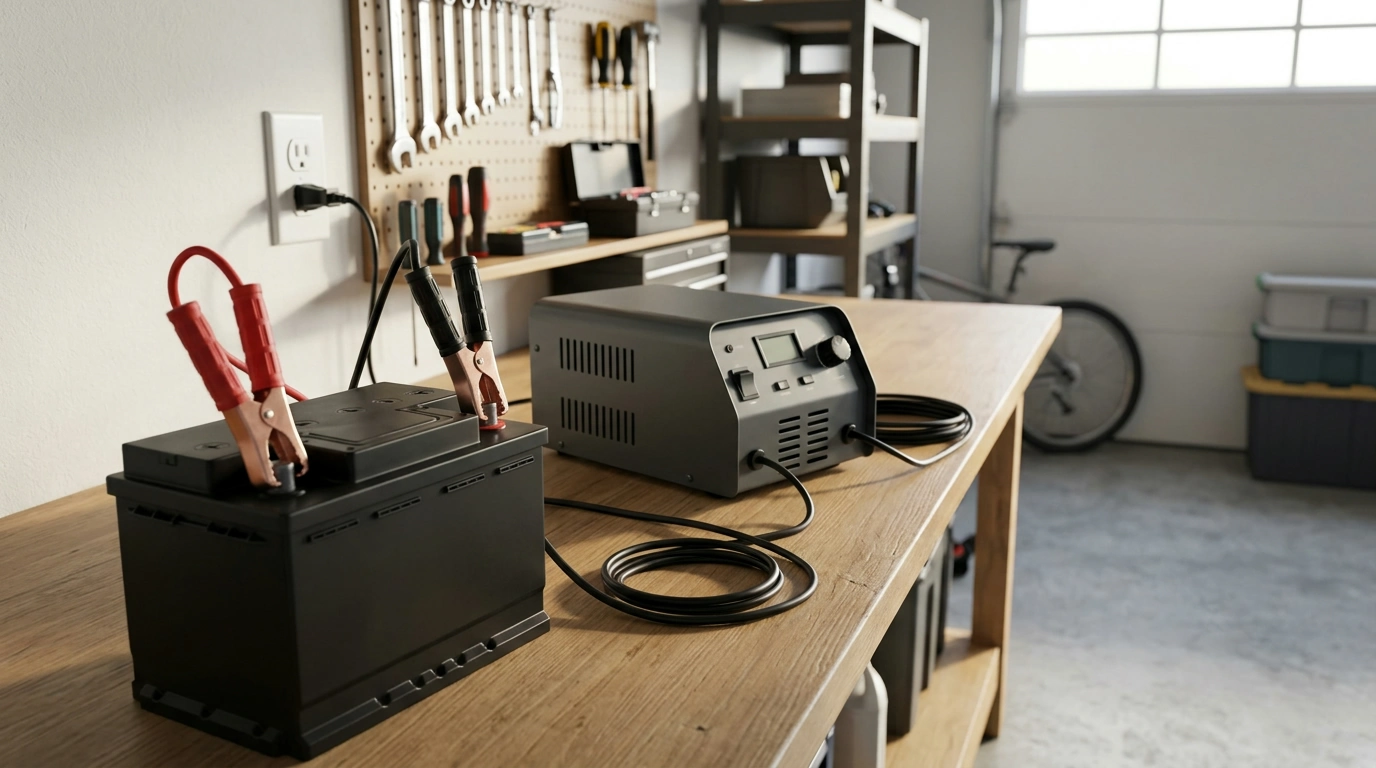
How long does it take to charge a battery with the Pulse Repair battery charger?
Charging time depends on your battery’s capacity, how much charge it has left, and the current the charger delivers. If your Pulse Repair charger supplies up to 6 amps, a depleted 12-volt lead-acid battery may need roughly 5 to 20 hours for common capacities of 25 to 100 amp-hours (Ah). A partially charged battery usually takes less time.
Charging slows as the battery approaches full capacity, so these are planning estimates rather than deadlines. Cold temperatures, battery condition, and a charger that reduces its output can also extend the time.
How can you estimate charging time?
For a rough estimate, divide the battery capacity in amp-hours by the charging current in amps, then add about 20% to 30% for charging losses and the slower finishing stage. This estimate assumes the battery starts deeply discharged and the charger can deliver close to its rated current for much of the charge.
- 25 Ah battery at 6 amps: approximately 5 to 6 hours.
- 50 Ah battery at 6 amps: approximately 10 to 11 hours.
- 75 Ah battery at 6 amps: approximately 15 to 16 hours.
- 100 Ah battery at 6 amps: approximately 20 to 22 hours.
For example, a 50 Ah battery that is only partly discharged may finish sooner than the estimate above. Use the charger’s full-charge indicator rather than elapsed time alone to decide when charging is complete.
Does Pulse Repair mode change the charging time?
It can. Pulse Repair is a separate function intended for compatible lead-acid batteries; it is not a promise that a damaged battery will recover or charge faster. A repair cycle can add time, and its duration and operation depend on the charger model.
Use the normal charging mode for routine charging. Follow the charger instructions before using repair mode, especially when the battery is connected to a vehicle. Do not use a lead-acid repair mode on a lithium battery unless the charger manufacturer explicitly permits it.
How do we recommend charging safely?
Match the charger’s voltage and battery settings to your battery, connect the clamps with the correct polarity, and charge in a ventilated area. Stop if the battery becomes excessively hot, leaks, swells, or gives off a strong odor. Never charge a frozen or visibly damaged battery.
For more help choosing a compatible battery and using a charger safely, see our 12V 6A battery charger compatibility and safety guide.
FAQ
Can you leave a battery connected after it is fully charged?
You can leave it connected only if your charger supports maintenance or float charging and its instructions permit it. Otherwise, disconnect the charger when charging is complete.
















Leave a comment