



VIB Sinking Blade Spoon: Pick a Weight and Retrieve
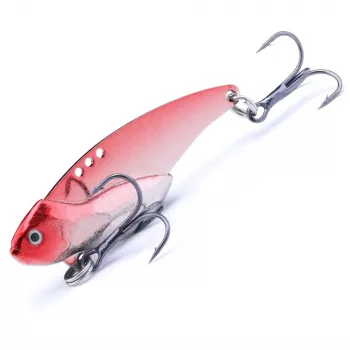
A sinking hard bait gives you a practical way to explore water below the surface without committing every cast to the same depth. Our VIB Sinking Blade Spoon comes in 0.42oz and 0.92oz options. The useful question is not which weight is always better, but which one you can control in the conditions you’re fishing. Start with a depth in mind, make a few deliberate casts, and let what you feel through the line guide your next adjustment. For more guidance, see Best Fishing Lures of 2020 – Fishing.org.
Start with the water you want to cover
When predator fish are holding below the surface, a sinking lure lets you vary how long you wait before retrieving. That gives you a way to explore more than one depth from the same casting position. You can also change your retrieve pace to see how the lure fishes through a particular stretch of water. For further reading, see Crazy Fish 10g Metal VIB Fishing Lure – Vibrating Swimbait ….
Before your first cast, look at the estimated depth, current, wind, and nearby cover. A sheltered bank with little current calls for a different approach than a windy point or a channel edge. Notice where rocks, vegetation, docks, or other obstacles could affect your retrieve. Those observations are more useful than applying one sink count everywhere: a count that keeps your lure clear in one spot may put it on the bottom in another.
We offer two listed weights for our VIB Sinking Blade Spoon Fishing Lure in 0.42oz or 0.92oz. Treat them as options for managing different presentations, not as guarantees of a particular sink rate, casting distance, or action. Water conditions and the way you retrieve matter, too.
Choose between 0.42oz and 0.92oz
Consider the 0.42oz option when you want a lighter presentation and conditions let you stay aware of where the lure is. In manageable wind and current, you may find it easier to work through a chosen area without adding more weight than you need.
The 0.92oz option is worth considering when wind, current, or deeper water makes the lighter lure difficult to manage. More weight does not automatically make it the right choice, though. Check your rod’s lure-weight rating and your line setup before tying on either option. Then pay attention to whether you can retrieve without repeatedly contacting bottom or cover.
| Option | Consider it when | What to check on the water |
|---|---|---|
| 0.42oz | You want a lighter presentation in manageable conditions | Can you feel the lure and keep it in your intended depth range? |
| 0.92oz | You need more weight to manage wind, current, or deeper water | Can your tackle handle the weight, and are you retrieving without repeatedly snagging bottom? |
Use the table as a starting point, not a fixed rule. A faster retrieve, a longer pause, or a shift in current can change how either weight fishes.
Try three retrieves before changing spots
Steady retrieve
Cast, allow the lure to sink to a count you choose, and reel at a consistent pace. On the next cast, keep your pace similar but use a different sink count. Comparing those casts helps you explore another depth without changing everything at once. Start with a shorter count when you are unsure where bottom or submerged cover begins.
Lift-and-fall retrieve
Raise your rod tip, then follow the lure as it falls while keeping enough control of the line to notice an unexpected change or strike. You do not need a dramatic lift on every cast. Around rocks, branches, or other snag-prone cover, modest movements can help you work the water while limiting unnecessary bottom contact.
Stop-and-go retrieve
Begin with a steady retrieve and add a short pause. Try a slightly longer pause on a later cast while keeping your other choices similar. Changing one factor at a time makes it easier to identify which approach gets attention. For broader guidance on lure presentations, you can also consult Take Me Fishing’s fishing lures guide.
As you begin or finish any retrieve, keep the lure safely clear of people, boats, and obstacles. Give yourself room to handle the rod and lure without a sudden swing toward anyone nearby.
Make small adjustments when fish do not respond
Work a promising spot systematically before moving on. Make casts at several angles, test a few sink counts, and then change your retrieve pace. This gives you a clearer sense of what water you have covered than repeating the same cast without a plan.
Keep your setup ready for the next cast
If you cover a lot of ground on foot between casting spots, choose footwear suited to the terrain; our Diadora Men’s Sneakers are another available option to consider for your plans, though you should use footwear appropriate to wet or slippery ground. Choose the lure weight that suits your tackle and expected conditions, then visit our VIB Sinking Blade Spoon product page above for current purchase details.
FAQ
Which weight should I choose for a VIB sinking blade spoon?
Compare the 0.42oz and 0.92oz options against water depth, wind, current, your desired presentation, and your rod’s lure-weight rating. Neither weight is the best choice in every situation.
How do I fish a sinking blade spoon without dragging bottom?
Begin with a short sink count and retrieve while maintaining contact with the lure. If you repeatedly touch bottom, shorten the count or raise your rod tip during the retrieve.















Leave a comment